Thursday, September 20, 2007

Terribly unoriginal


And....we're back! It's been a wild ride these past few months. How best to update the blog? Serial updates? Back-blogging? one gigantic rant? What's a narcissistic megalomaniac to do?

Montage. I got the idea from another blog, but truly, it's perfect. Cue music--something ripe with major chords and a sense of urgency. Screen brightens to the glare of an overhead lamp. Loud noises, a flutter of hands obscuring the view. A shadow emerges into the light. The screen focuses. Me, in scrubs, smiling " Welcome back-you scared us a bit there!" Cut to a hospital corridor, brightly lit. A flash of white coats. A swirl of indistinguishable faces. Zooming out beyond the corridor, floating beyond the hospital. A view of Springfield in the horizon. A blush of clouds. A title in blue fade into view: "Medschool...101." Cut to a hospital ward. More white coats. I'm busy writing in charts, inquiring nurses, putting in orders. An image of a running clock is superimposed onto the screen; It's 6:00 am. The arms of the clock swirls ever faster as the action speed up in the background. The screen fades to black. Voices appear. "Mikey, so we are getting married?" Screen fades back-I'm on a peak overlooking lake Winnipesaukee. Miles of New Hampshire stretches out in all directions. I turn to Mike. He smiles. Our eyes lock. The view diffuses into a wash of greens and blues. The green begins to flash. My pager alarm is blaring. Zoom out. It's 2:00 am. I stumble in the dark, searching for my white coat. Another category 1, male-22 years old, motor-vehicle-collision. Cut to corridor view. I disappear around a corner. Words fade in "...to be continued."

Tuesday, June 05, 2007

Doctors play hardball!


Medicare cuts will reduce patient access to physicians. In a news analysis, the UPI (6/5, Pierce) reports that "facing down the perennial threat of Medicare physician payment cuts," the American Medical Association "said Monday slashing what doctors are paid would keep many seniors from accessing care." Dr. Cecil Wilson, board chair of the AMA, told reporters, "The physician foundation that Medicare's promise [to seniors] is built on is at risk." The sustainable growth rate formula, which "determines how much Medicare pays doctors for services," calls for a 10 percent cut in 2008. Notably, "for the past five years, Congress has stepped in to overrule the formula, but so far this year, no such bill has been introduced." However, if "that rate reduction goes through, about one in three doctors will decrease the number of Medicare patients they accept, and more than one in four doctors will stop accepting Medicare patients altogether," according to a survey of almost 9,000 physicians conducted by the AMA. Also, "about 8 percent of those surveyed even said they would stop treating seniors on Medicare who are already their patients." HealthDay (6/5) notes the AMA poll in its health highlights section.
AMNews (6/11, Glendinning) adds, "organized medicine wants a permanent end to the current Medicare payment formula for physicians, but it is willing to give Congress some time to move to an alternative system." Nearly 80 organizations, including the AMA, "signed a May 17 letter to every lawmaker outlining recommendations for overhauling the Medicare reimbursement system. The first recommendation calls for a full, immediate repeal of the payment formula that has doctors lined up for a decade of annual cuts." However, the "signatories acknowledge that immediate abolishment of the sustainable growth rate formula might not be possible. If lawmakers cannot enact permanent reform right away, they should establish 2016 as the 'date certain' to complete the transition to a new system that would update physician pay based on increases in the cost of providing care, the organizations write."

-Morning Rounds. AMA members communication. June 5th 2007
-------------------------------
This further confirms what I've always known: that economics run American medicine. People, get real.

Saturday, June 02, 2007

"Jesse"

I can't get this song out of my head. The first time, I did a double take. He said--boy. He said love. No sly innuendos. No furtive euphemisms. Just a boy talking about a boy he loves, one who doesn't love him back. Wow.

In many ways this is the oldest refrain, a hackneyed theme for a song. But say it with enough sincerity in a compelling context, and it becomes a powerfully beautiful song. What's even more amazing is the fact that this piece is by Ivri Lider, one of Israel's most popular contemporary recording artist. I find it incredible that an openly gay musician can sing these sultry words in a part of the world where gays are still stoned and killed for being themselves. The fact that Ivri can be successful in Israel is a testament to his talent, but also, I think, to the remarkable diversity that is secular Jewish culture. We can criticize Israel for many things, but people like Ivri Lider have given me new-found respect for the society that makes all this possible. I am obliged to support his music, not only because it's important to have voices like his heard far and wide, but also out of sheer admiration for a truly talented musician. You can find out more about Ivri at http://www.ivrilider.com/. I know some of you would love to hear what he has to say, and more importantly, how he's saying it.

Thursday, May 03, 2007

Bisexuality, NSFW

I wish I knew spanish! Can't believe that this is a real music video that could be aired on TV. wow.

Tuesday, April 10, 2007

my new musical obscession

She's really, really good, Terra Naomi. I'm sure if you frequent youtube you know her already. Whatever, I'm always late to the party. She's a great blend of Alanis Morissette, and a hint of Jewel. Alanis Morissette is an alto, and the style reinterpreted here in this soprano range is just truly beautiful. Terra's tone is clearer than that of Alanis, approach the thinner, more lyrical voice of Jewel. At least in this song, her voice is largely situated between these two singers in terms of tonal quality. And she knows how to use those high notes to great effect. About her musical style, the stream of consciousness lyrics may be overdone, but it has its poetic moments. Overall though, Terra is pretty freaking awesome.


hypochondriasis...maybe

I wonder if Mikey has Diabetes Insipidus....after reading the endocrine section. Hmm, he does seem to drink (H20!) and pee a lot...

Sunday, April 08, 2007

confessions of a med student: step 1 sucks

I tell myself this everyday as I skim the website studentdoctor.net : 'Breathe. You need to breathe. If you die before the exam, it's no good.' Right.

Despite appearances, I've officially entered freak-out zone these past few weeks as June 22nd approaches. Just the other day I felt the instinctive urge to visit CVS for more highlighters. But I already have 15. In my backpack. I still went to CVS...but for instant coffee instead.
Every time I go to out to dinner with friends I get a nauseous feeling that I'm being really really naughty for not spending the time studying. It's a nagging, sinking feeling of guilt that lingers all night until I give in and sneak a couple peeks at biochem or something equally nerdy, like pharm. But the most disturbing thing I've done to date has to be this: I've begun listening to Goljan lectures while I sleep (Diffusion don't fail me now!) I haven't been doing it for very long, but I have begun to notice his voice echoing in my head at random times, the way songs get stuck in your head and you can't seem to get them out. Occasionally, a coherent tidbit like the steps of the clotting cascade would bubble to consciousness with Goljan's voice. Sadly, such pearls of wisdom are at the moment, irretrievable on command. I don't know if the night listening thing is working, but it sure makes for some really trippy moments.

Tuesday, April 03, 2007

It's raining men.

Watching '300' was hilarious. Not the least for the ridiculous dialogue, but for the ridiculously plastic looking Ken-dolls that populated the screen. Not that I'm complaining. This youtube clip sums up my sentiments exactly.

Monday, March 26, 2007

The full story

She lay there, dying. Around her a scatter of red lottery tickets planted themselves like newly bloomed poppies. Lottery tickets continued to fall from the sky, having been tossed so high into the air they fluttered aimlessly, a silence descending softly onto the bloody pavement. It was an accident. I didn't see her when she fell.

I had been sitting at Givral away from direct sunlight to avoid a tan. Hours ago, the temp soared over 100 degrees Fahrenheit with 90 percent humidity, the kind of weather that made cotton shirts clung in perpetual films of sweat. Still, while the air around me tasted of damp earth as if anticipating a summer storm, there was no cloud in sight. My waiter--gaunt, wafer-like, and slightly comical in his over-sized black pants with an ill-fitting tuxedo top--bowed when he approached my table. His face--a shade of burnt umber framing a sharp, protruding nose beneath a pair of blood-shot eyes--mustered a slight smile, crooked and shy as he delivered my coffee, allowing light from the edges of my silver spoon to enter the deep valleys receding from the corners of his mouth. He asked me, gingerly, in heavily accented but still understandable English, about my stay in Saigon. I told him two weeks.

My Vietnamese had surprised my waiter. He thought I was Korean. In the new Saigon, he was right to be cautious; foreigners were a fact of life. I had told him two weeks, and maybe an extra couple of days, depending on whether I was to head north, to Hanoi, to view the property. He nodded knowingly. "Another land deal," he repeated in Vietnamese, as if assuring himself he had assumed correctly, "Another land deal. Are you coming back to live? If so, welcome!"
"No…too many uncertainties," I mumbled a non-answer, my hesitancy betraying an obvious unease. He had understood. A quick, slight bow, and he was gone.

It was hours before, when the white heat outside intensified as she lay dying, that I sought shelter from the light at Givral. This old restaurant, I was told, had survived three governments, unmarred by the upheavals and bloodshed, protected inside its own bubble of colonial glass and copper for nearly a century. My grandfather took me here when I was five, for ice-cream and air-conditioning, rare and expensive treats back then. Two commanding Corinthian columns still framed the entrance to this grand bistro, columns whose creamy marble, imported from Italy, gleamed in the midday sun, assured of its own decadence. Now, instead of looking out onto run-down shops, Givral faced the five star Park Hyatt across the street. With its exquisite facade of white walls, the hotel glorified Indochina in ways that for a time, had to be publicly forgotten in this socialist republic. But no more. In this freshly air-conditioned Saigon, everything old was new again.

He was what brought me back here, back to this city of a thousand newness. I palmed the envelope delivered to me this morning by his caretaker, feeling the thick stationery with its reflected whiteness burning in the glare. In between sips of coffee dark and deep, I closed my eyes. I allowed the hot, humid world beyond my senses to disappear behind glass windows. "Yesterday" began playing on the overhead speaker. An eternity passed. I opened my eyes to the envelope, still there, on the table, waiting. I reached for it. Amidst the muted din of cityscape rushing past me, I opened the envelope to read--old news. The house was mine for the taking, but I could sell it. Some company wanted the villa turned into a boutique hotel, another Indochina revival, but this time in brighter pastels. They said the house had great bones, what with the location, and the history, and the promise of more tourist dollars pouring into this place. Bones. Was that all that was left?

Dead noon. It was two hours before the accident, before the fall. The light was becoming unbearable. Shades were drawn.

"Sir, sir." My waiter interrupted me in a delicate, but insistent manner to be expected of a well-trained attendant. "Is everything you like? Would you want another cafe?" He uttered in English.

"Uh no, thank you. A bottle of water, if you please. And the New York Times." I mumbled, trying my best to not sound imposing.

"Certainly." He said, bowing.

I put the letter back into its crisp white envelope. Squinting through the thin bamboo slats of the drawn shade, I was surprised to see streets once choked with motorbikes suddenly empty in this terrible heat. It was as if a camera flash had gone off, freezing this moment, and the blinding light had vaporized all the bustle and noise and people to leave nothing but the glaring mansions of new wealth, the stately paved roads lined with white and green taxi cabs, the bleached white park benches, and leaves--curling high on trees draining parched earth.

"It's too hot today." The waiter spoke from behind me, breaking my reverie. "We have air-conditioning! Very lucky."

One past noon. It was one hour closer to the accident. I thanked my waiter for the paper and water ,and scanned the room. There were more people in the restaurant, tourists with saggy breasts saddled with children emerging from an unpleasant steam bath. Sweaty, overheated, they entered wearing white T-shirts soaked to translucency, with large oval swaths of perspiration around their armpits and necks, their skin baked to a blistery red. At the patisserie counter their children were pointing, tugging at their parents' shorts as they picked out sticky, glazed pain-au-chocolat while clamoring loudly for ice-cream with flavors like strawberry and chocolate, avoiding the more exotic, foreign offerings of mango and kumquat. The slight-figured boy with short-cropped hair and a broad smile behind the counter delighted in the new business. Stooping down to their height, he asked the children, "This one? You want this one? Or that one?” He couldn't resist noticing the blond children’s inquisitive eyes, pretty like colored glass, intensely sparkling in shades of blue and gray, so different from his own. They delighted him so much, these beautiful children, that he neglected to mind their pudgy, sweaty fingers smudging the pristine glass panels he had so meticulously cleaned moments earlier in anticipation of the afternoon rush.

Two past noon. The accident would soon be upon us. Despite the late afternoon hour, the scorch of midday was still in full swing. The children, meanwhile, were quieted finally with tubs of ice-cream and French fries. Overhead, 'Yesterday'. Still 'Yesterday'. I lifted the shade near my table; the light, although harsh, had been peaceful, and I was beginning to miss it. A couple more tourists with children entered, this time waiting by the front door for seating because the restaurant was full. My waiter visited my table for a fourth time. Smiling.

I got the hint. "Can I have the check please?"

"Yes sir," he responded, and quickly departed.

My eyes were drawn to a new couple who had just entered. They were fair-skinned, with rosy cheeks and brilliant mops of golden hair draped on top angular features betraying strong bones and good teeth. A young couple who spoke an inscrutable language--Swedish, maybe--they were unremarkable except for their gargantuan height. They had a son, a sprightly boy of six or seven. He, who refused to stand still while his parents waited patiently, darted between the front windows of Givral framed by Corinthian columns to make faces at passers by.

There she was, a girl, not much older than him. He made her laugh. I'd seen her wandering the streets across from Givral, furtively darting from corner to corner selling lottery slips for about 2 cents a piece while avoiding the police. She, no doubt, had risked being harassed by the police in order to rest in the shadow of the giant red awnings that shielded the stately windows of Givral from the harsh summer sun. It was nice and cool underneath the shade, with window boxes still in bloom despite the heat.

She reminded me of so many others, children who wandered aimlessly on these streets selling cigarettes or plastic trinkets or lottery tickets in threadbare pajamas and plastic sandals. Gaunt, shrunken, and blackened by the sun, they sell by begging for pity, appealing to anyone who would make eye contact. But their kind was not welcomed here. The new market economy needs no guilt for business.

A frail woman approached the girl from behind and scolded her. The woman, a street vendor cloaked in black pajamas and floppy sandals, carrying a basket of oranges, took the girl's right hand. She led the two of them away from the restaurant, toward the intersection separating the Grand Hyatt and Givral. The girl, looking gawkish in worn pink pajamas two sizes too small, with bright darting eyes and a toothy smile, waved goodbye to the teasing Swedish boy behind the glass, slightly frowning as she departed. The boy paused and, facing the loss of his sole adoring audience, turned to his father. They uttered something inscrutable, after which the father reached for his wallet, withdrawing some cash. Excited, the boy grinned and waved wildly, gesturing the girl to come back.

"Your check, sir." The waiter said, smiling. I proceeded to sign.

It was two past noon. I didn't see her when she fell.

"Oh my God!" exclaimed the Australian woman to my right. Parents shushed their children. Startled, I turned. It was as if a flash had gone off, freezing this moment, and the blinding light had vaporized all the bustle and noise and people to leave nothing but the glaring mansions of new wealth, the bleached white park benches, and a little girl lying in the middle of the newly paved boulevard, her limbs haphazardly arranged, her head cocked to one side as if sleeping. Around her a scatter of red lottery tickets planted themselves like newly bloomed poppies. Lottery tickets continued to fall from the sky, having been tossed so high into the air they now fluttered aimlessly, a silence descending softly onto the bloody pavement.

My waiter rushed out the front door. "Someone should dial the police!" the Australian woman yelled. The crowd of tourists drew themselves to my window for a better view. Outside, traffic snarled as an enlarging circle of people gathered around the girl and the frail old woman prostrated on the ground, whose wails and shrieks can be heard echoing through the glass windows. I could see my waiter, his tuxedo frame nimbly filtering through the crowd, leading policemen toward the scene. He soon came back.

"What happened?" Inquired the Australian woman. "Did they catch the guy? He didn't stop! The motorcycle kept going! How awful! And where's the ambulance? Is there an ambulance coming?"
"I don't know, madam." Stammered the waiter as he reached for his bag, grabbing his wallet." They...we...no did not catch. She will go to the hospital. Everything...ok. Please...try to continue your lunch."
"How are you getting her there?" I yelled to the waiter in Vietnamese and surprised him.
"In taxi. I will take her to hospital, in taxi, sir!" He replied quickly in English.
"Do you need any help?" I continued. "I can go with...Do you need money? Here, I have..." I muttered, scrambled, looking for my wallet. The Swedish boy's parents, still aghast at what happened, reached for their wallets and thrust up wads of cash.
Other tourists followed.

"Would they take traveler's checks?" The Australian woman yelped, waving a fist full of notes. My waiter turned to me. He gently pushed his hand against mine, thrusting money back towards my chest. "We don't need money, sir. But thank you." He told me calmly in Vietnamese, His eyes flickering with an exasperated gratefulness. He then turned to everyone else, "Thank you all. You are too generous." With a dash, he was gone. He didn't take anyone's money.

It soon began to rain, a miracle breaking the sweltering heat. I watched from Givral's windows to see the crowd outside dissolved as quickly as it had formed. Traffic thinned in the dissipating heat. Above, the sky turned an orange hue that deepened toward the horizon, and the wispy trails of clouds from earlier soon gave way to large, nebulous gatherings, gravid and gray with impending rain. With certainty the clouds broke, hurling sheets of water toward this parched city. Downtown Saigon was strangely empty again, its gleaming benches deserted, its rivers of tar devoid of motorbikes and taxicabs, cleansed of blood and lottery tickets. Except for the occasional thunderclap and the pleasant drizzle of rain splattering across my window to the tune of the Beatles' greatest hits, there was no sound inside. We had all been hushed by the storm, hushed by the uncertainties that marked our day, silenced by the inexplicable fortunes of our lives in light of the cruel fates of others. The numbness we felt was as intangible as smoke. And so we sat, in silence, as the Beatles strummed on.

The light, meanwhile, had dimmed considerably. Apart from spectacular bursts of lightning that flared intermittently, all was gray. As the rain continued to pour, water overflowing from the gutters began to wash refuse onto the pavement, bringing forth discarded newspapers and plastic water bottles and empty Coca-Cola cans once hidden from view. The intersection in front of Givral slowly filled with bits of paper and plastic bags and orange rinds that floated like little rafts across dark, uncertain waters. The water soon spilled onto the footsteps of the Park Hyatt, lapping up at the whitewashed masonry. There, it delivered bits of trash in cracks and crevices unseen in the blinding brightness hours before. But in this gray light, the crevices stood out like the deep wrinkles of a newly laundered shirt. In a slow, but deliberate manner, sewer water worked its way into the paint, depositing films of mud onto whitewashed walls, staining the satin-finish already peeling in the rain.

Wednesday, March 21, 2007

The Deed: part 2

The follow up and conclusion to the story I posted in July. The deed part one can be read here.
comments welcome.

--------------------------------------------------------------------------------------------
I didn't really have to open the letter; I'd already known what Grandfather was leaving me. The house was mine for the taking, to do with as I pleased. A company had offered to buy it for a sum that could pay off all my loans. They wanted to make it into a boutique hotel, another neoclassical imitation of the Indochina past, this time with brighter pastels. They said the house had great bones, and the location in Hanoi was ideal for tourists. Bones. That was all that was left.

It was now dead noon. The light soon became unbearable. Shades were drawn.
"Sir, sir." My waiter interrupted me with his delicate, but insistent, English. "Is everything you like? Would you want another cafe?"

"Uh no, thank you. Although I would like a bottle of water, if you please. And the New York Times." I muttered, trying my best to not sound imposing.

"Certainly." He bowed.

I put the letter back into its crisp white envelope. Squinting through the bamboo slats of the drawn shade, I was surprised to see streets only moments ago choked with cars and motorbikes, now suddenly abandoned. It was as if a camera flash had gone off, freezing this moment, and the blinding light had vaporized all the bustle and noise and people to leave nothing but the gleaming mansions of new wealth, the stately paved roads lined with taxi cabs, the bleached white park benches, and leaves--curling high on trees draining parched earth.

"It's too hot today." The waiter spoke from behind me, breaking my reverie. "We have air-conditioning! Very lucky."

I thanked him for the paper and water, and scanned the room. There were more people in the restaurant now, tourists in baggy shorts and multicolored sandals who looked as though they've just emerged from a steam bath. Sweaty, overheated, they came in wearing white T-shirts soaked to translucency, with large oval swaths of perspiration around their armpits and necks, their skin a blistery red. At the patisserie counter their children were pointing, tugging at their parents' shorts as they picked out sticky, glazed pain-au-chocolat while clamoring loudly for ice-cream of various colors. The slight figured girl with short-cropped hair and a broad smile behind the counter was clearly overwhelmed. "This one? You want this one? Or that one?" She asked the blond children with their inquisitive green and blue eyes, pretty like the glass eyes on expensive import dolls, children with pudgy, sweaty fingers smudging the pristine glass panels with their incessant pointing. She exchanged knowing glances with their haggard parents, and found instant camaderie in their mutual exhaustion. It was okay, her eyes seemed to say. There was air conditioning now. Welcome.

The children were soon quieted with treats of ice-cream and french fries. The Beatles made a come back on the overhead speakers. 'Yesterday'. Still 'Yesterday'. I lifted the shade near my table; the light, although harsh, had been peaceful, and I was beginning to miss it. Already one hour past noon, the scorch of midday was still in full swing. A couple more tourists with children entered, this time waiting by the front door for seating because the restaurant was full. My waiter hesitated, then visited my table for a fourth time. Smiling.

I got the hint."Can I have the check please?"
"Yes sir," he responded.

My eyes were drawn to the new couple who had just entered. They were fair-skinned, with rosy cheeks and brilliant mops of golden hair draped on top of angular features betraying strong bones and good teeth. A young couple who spoke an inscrutable language--Swedish, maybe--they were unremarkable except for their gargantuan height. They had a son, a sprightly boy of six or seven who refused to stand still while his parents waited patiently, instead darting between the front windows of Givral framed by Corinthian columns, making faces at passers by.

His antics attracted the attention of a girl, not much older than him, who was selling lottery tickets outside. He made her laugh. I'd seen her wandering the streets hours before, across from Givral, furtively darting from corner to corner selling lottery slips for about 2 US cents a piece while avoiding the police who patrolled the area for unlicensed vendors and beggars. She, no doubt, had risked being harrassed by the police in order to rest in the shaddow of the giant red awnings that shielded the stately windows of Givral from the harsh summer sun. It was nice and cool underneath the shade, with window boxes still in bloom despite the heat.

She reminded me of numerous others, children who wandered the streets selling cigarettes or plastic trinkets or lottery tickets in threadbare pajamas and plastic sandals. They all had the same face: gaunt, shrunken, and blackened by the sun. They sell by begging for pity, appealing to anyone who made eye contact. They were often chased from gentrified areas like Givral so tourists wouldn't feel uncomfortable, and could instead focus on more important things, like which silk pillow to purchase. Gone too were the beggars who crawled on amputated legs and arms, the illegal rural migrants from Sa Dec who sold fake Gucci plastic sandals, the mothers with infants on their backs who offered Pho noodles for 50 US cents a bowl out of pots they carried on shoulder slings, the girls who peddled sugarcane chunks and tart cherries snacks for 10 cents a bag. They were all purposefully erased from images of this newly minted Saigon. High class, Western commerce, after all, needed a clean slate for business.

A frail woman approached the girl from behind and scolded her. The woman, a street vendor cloaked in black pajamas and floppy sandals, herself carrying a basket of fruits, took the girl's right hand. She led the two of them away from Givral, toward the intersection. The girl, looking gawkish in worn pink pajamas two sizes too small, with bright darting eyes and a toothy smile, waved goodbye to the teasing Swedish boy behind the glass, slightly frowning as she departed. The boy paused and, facing the loss of his sole adoring audience, turned to his father. They uttered something inscrutable, after which the father reached for his wallet, withdrawing some cash. Excited, the boy grinned and waved wildly, gesturing the girl to come back.

"Your check, sir." The waiter said, smiling, still as efficient as ever. I proceeded to sign.

"Oh my god!" exclaimed the Australian woman to my right. Parents shushed their children. I turn toward the direction of their gaze out the window. It was as if a flash had gone off, freezing this moment, and the blinding light had vaporized all the bustle and noise and people to leave nothing but the gleaming mansions of new wealth, the bleached white park benches, and the little girl lying in the middle of the newly paved boulevard, her limbs haphazardly arranged, her head cocked to one side as if sleeping. Around her a scatter of red lottery tickets planted themselves like newly bloomed poppies. Lottery tickets continued to fall from the sky, having been tossed so high into the air they now fluttered aimlessly, a silence descending softly onto the bloody pavement.

My waiter rushed out the front door. "Someone should dial the police!" the Australian woman yelled. The crowd of tourists drew themselves to my window for a better view. Outside, traffic snarled as an enlarging circle of people gathered around the girl and the frail old woman prostrated on the ground, whose wails and shrieks can be heard echoing through the glass windows of Givral. I could see my waiter, his tuxedo frame nimbly filtering through the crowd, leading policemen toward the scene. He soon came back.

"What happened?" Inquired the Australian woman. "Did they catch the guy? He didn't stop! The motorcycle kept going! How awful! And where's the ambulance? Is there an ambulance coming?"

"I don't know, madam." Stammered the waiter as he reached for his bag, grabbing his wallet."They...we...no did not catch. She will go to the hospital. Everything...ok. Please...try to continue your lunch."

"How are you getting her there?" I yelled to the waiter in Vietnamese and startled him.

"In taxi. I will take her to hospital, in taxi, sir!" He replied quickly in English.


"Do you need any help?" I continued."I can go with...Do you need money? Here, I have..." I muttered, scrambled, looking for my wallet. The Swedish boy's parents, still aghast at what hasd happened, reached for their wallets and thrust up wads of cash. Other tourists followed.

"Would they take traveler's checks?" The Australian woman yelped, waving a fist full of notes.

The waiter turned to me. He gently pushed his hand against mine, thrusting money back towards my chest. "We don't need money, sir. But thank you." He told me calmly in Vietnamese. His eyes flickered with an exasperated gratefulness as if he had carried this conversation before. He then turned to everyone else, "Thank you all. You are too generous," yelled the waiter. With a dash, he was gone. He didn't take anyone's money.

It soon began to rain, a miracle breaking the sweltering heat. I watched from Givral's window to see that the crowd outside had dissolved as quickly as it had formed. Traffic thinned in the dissipating heat. Above, the sky turned an orange hue that deepened toward the horizon, and the wispy trails of clouds from earlier soon gave way to large, nebulous gatherings, gravid and gray with impending rain. With certainty the clouds bore fruit, hurling sheets of water toward this parched city. Downtown Saigon was strangely empty again, its gleaming benches deserted, its rivers of tar emptied of motorbikes and taxicabs, cleansed of blood and lottery tickets. Except for the occasional thunderclap and the pleasant drizzle of rain splattering across my window to the tune of the Beatles's greatest hits, there was no sound inside the restaurant. We had all been hushed by the rain, hushed by the uncertainties that marked our day, silenced by the inexplicable fortunes of our lives in light of the cruel fates of others. The numbness we felt was as pervasive as smoke, as though we blame ourselves for the wrongs of the world but were unable to articulate our guilt. And so we sat, in silence, as the Beatles strummed on.

The light had dimmed considerably. Apart from the spectacular bursts of lightning that flared intermittently, all was gray. As the rain continued to pour, water overflowing from the gutters began to wash refuse onto the pavement, bringing forth discarded newspapers and plastic water bottles and empty Coca-Cola cans once hidden from view. The roads slowly filled with bits of paper and plastic bags and orange rinds that floated like tiny rafts across dark waters as muddy as the Saigon river, a stream once swimming with bodies from a war long ago, whose sorrows today lay buried beneath its turbulent flow. The water soon spilled onto the footsteps of the Park Hyatt, lapping up at the white-wash masonry. There it deposited bits of trash in cracks and crevices unseen in the blinding brightness before, crevices that now, in this illuminating grayness, made the white walls appear grimy, dingy, and no longer glamorous.

Wednesday, March 14, 2007

Biology, how I love thee

Normally I don't double post similar content on different sites, but this is just too good and too perfect to not be on my blog. Yes, this is news that we can all put to good use. Like I've said before, I feel vindicated.

I will temper my adoring praise of this recent study by asking if the study's participant were randomly selected, and if there is enough representation of different orientations just so we're not skewed either way. For that matter, I'd love to hear someone repeat this study parcing out any differences between orientation and pattern of visual scanning. What the hell am I talking about?
Read this: Men stare at crotches

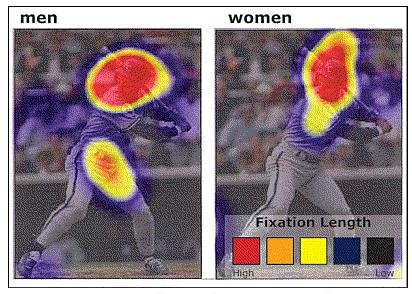
"The Online Journalism Review reports on Jakob Nielsen's use of an eye-tracker to look at how different people read the Web -- particularly news. There are lots of interesting findings, but the best is the revelation that men fixate on any visible genital areas in photos -- even animals' crotches come in for a good eyeballing.

Although both men and women look at the image of George Brett when directed to find out information about his sport and position, men tend to focus on private anatomy as well as the face. For the women, the face is the only place they viewed. This image of George Brett was part of a larger page with his biographical information. All users tested looked the image, but there was a distinct difference in focus between men and women.

Coyne adds that this difference doesn’t just occur with images of people. Men tend to fixate more on areas of private anatomy on animals as well, as evidenced when users were directed to browse the American Kennel Club site."

Meh. Old news.

Ok, I'm too busy to blog right now, but apparently I have enough time to procrastinate (see the past 5 posts). This one just affirms that O.M.G. I'm, like, totally gay.

You Are Most Like Charlotte!

You are the ultimate romantic idealist
You've been hurt before, but that hasn't caused you to give up on love.
If anything, your resolve to fall in love is stronger than ever.
And it's this feminine optimism that men find most appealing about you.


Romantic prediction: That guy you are seeing (or crushing on)?

Could be very serious - if you play your cards right!


hah! my card's already played...where's my bridal registry?

Monday, March 12, 2007

being gay and asian.

Quite a good Australian documentary. Amazingly accurate.

latch key.

In the name of procrastination, and gay short movies. hilarious.

Sunday, March 11, 2007

Dare.

This is a great short.

Dare
Uploaded by mrwildwildwest

Saturday, March 03, 2007

What never was

Cole Porter said it best:

In the still of the night
as I gaze from my window
at the moon in its flight
my thoughts all stray to you.
There he was. Smiling. I'd recognize those eyes anywhere.

I'm Rob.
Oh, right. Hi Rob. Nice to meet you.

He offered his hand. We've never met before, but I felt I knew him. The resemblance was uncanny: same touch, same hair, and those same, unmistakable eyes, glinting at me. I had seen a ghost.
In the still of the night
while the world is in slumber,
oh, the times without number,
darling, when I say to you
It was Saturday. Too cold to be fashionable, but I insisted that Mike and I at least drop by. An innocent dance at the college, made more sketchy by the presence of grad students insinuating ourselves into the tangles of freshmen on the dimly lit floor, was taking place. I'd invited Ben, himself a grad student. He brought Rob.

Rob, how do you know Ben?
I'm year 2.
Oh.
Yeah. And you?
Oh. I'm with Mike. That's how I know Ben.
Don't we feel old here.
Yeah. (he laughs). Ah well.

We didn't talk very much, but we didn't need to. Somethings, you just know. Familiar associations were everywhere--Texas, Duke, Harvard--it was all too familiar; the old rush to the head, the dizzying, stupifying intoxication of a former obsession became real again.

I clung to Mike. Steve found Ben, and soon there were five, two couples and a loner who had no choice but to make the best of the situation. He smiled. A lot. He knew I watched him dance, and liked the attention. Did some floor moves--quite the acrobat. Ryan would never move like this. But still, I could hear that Southern swagger, the same bravado, the soft spoken gaze that to me said more than he ever did out loud. Suddenly, it all came flooding back, the old refrains.
"Do you love me as I love you?
Are you my life-to-be, my dream come true?"
Or will this dream of mine
fade out of sight
like the moon growing dim
on the rim of the hill
in the chill still of the night?
Mike snuck behind me. I felt his strong arms around my waist, his breath on my neck--warm, familiar, lovely. I turned my gaze to find him smiling; I smiled back. With a sigh, I buried myself in his chest, surrendering. His scent enveloped me in a calming balm.

Is something wrong?
No. no. Everything is fine now.
Everything is fine now.

Thursday, February 08, 2007

Escapism

Just picked up Hemingway, again. Not that I have time, but who can deny this mental vacation:
""The house was built on the highest part of the narrow tongue of land between the harbor and the open sea. It had lasted through three hurricanes and it was built solid as a ship. It was shaded by tall coconut palms that were bent by the trade wind and on the ocean side you could walk out of the door and down the bluff across the white sand and into the Gulf Stream."
- "Islands in the Stream," Ernest Hemingway

photoeye

Friday, February 02, 2007

Because it's...


February. Hallmark season. And I'm a sucker for Cole Porter. A new playlist; something old, something new, something lovely for you.

Thursday, February 01, 2007

Stunning!

The above is a rendering of the cultural arts center as part of the new cultural district to be built in the UAE's city of Abu Dhabi. It is so awesomely cool it can never be built in the US. Ever. Because we like our buildings clunky and chunky, like our expanding waistline.

Frank Gehry is contributing, and so are several other internationally famous architects. The building above will house a concert hall, some exhibition space, and probably a gift shop or two.
Abu Dhabi is trying to build its tourism industry. I guess if you put bucket loads of money together with the williness to embrace modern design, you get fabulous in return.

[sigh] If I weren't in fear for my life because, well, the whole gay issue, I'd so go there to visit.

Sunday, January 28, 2007

A missed diagnosis?

"Come, I want to show you something."

These are the words that I dread, especially since coming from my attending, they usually mean some kind of test. So far, doing rounds in the hospital has been fun because the challenges have been reasonable. Take a history. Conduct a physical. Present findings to the attending. Check, check, and check. I'm beginning to sound like I know what I'm talking about. "CBC creat and BUN are high, but not stable so I'd hesitate to calc a GFR. Crit's high, and she's hypenatremic; I think she' dehydrated. We should watch her drip, and monitor that IV antibiotic dose... "

This case, however, was something else.

"Come on, I want to show you something."
"Okay. Should I grab the chart?"
"No, just come. She' my patient. I want you to do an H&P on her. Right now."
"Right now...in front of you? And everybody else?"
"Yes. You up for it?"
"[me thinking: OMF...shit.] sure!"

Half an hour later, I had no idea what was wrong with her. Imagine my relief when the attending himself admitted he didn't know what was wrong with his patient. Still, it was a peculiar case: young mother comes in with diffuse, non-radiating abdominal pain for past 72 hours. Has not had a bowel movement due to her pain. Urination and urinalysis was normal. Abdominal CT scans were unremarkable. Blood count was normal. Electrolytes were normal. No burst appendix. No signs of appendicitis. Everything was so normal, in fact, that there was nothing we could do but give her a morphine drip for her ever present, ruminating, tear inducing pain.

She was a young, pleasant woman, just delivered twins via C-section four weeks ago. She said everything was fine until 2 nights ago when she woke up with 'extreme abdominal pain'. Apart from the stress of dealing with twins and a five year old daughter, she seemed a happy new mama. My attending was flummoxed. The radiologists who looked at her CT scans were flummoxed. Surgeons were coming in droves to examine her, checking out the C section although her scar was healing nicely. By the time my shift ended, we still didn't know what was wrong with her. The attending promised me he would let me know what happened. And I went home.

It wasn't until I was well on my way that a question I'd brushed aside earlier bubbled up to consciousness: "What was that bruise on her belly?". It was the size of a fist, no evidence of skin break indicating that it mostly likely was a blunt trauma of some kind. But I didn't ask her about it. I don't think my attending asked either. We had noted it on the physical, but both of us ignored the finding and continued to look elsewhere for clues: in her lab results, in her CT, in her history...everywhere but the place that now seemed ripe with clues. Come to think of it, the bruise looked to be about several days old--its edges have begun to heal, but the center was still a deep purple. How could it be that numerous other doctors before me had examined her and not a single one remarked on her charts the patient's explanation for her abdominal bruise? Did all of us forget to ask?

A recent article in the Boston globe criticized doctors for a phenomenon call 'attribution'. It was basically an attack on the way doctors think, the way we are taught to think along the lines of stereotypes, salient classic associations that help us make standard diagnoses but too easily make us miss other important clues. Sure, the bruise could have been nothing. But I doubt anyone of the doctors know for sure. I don't know what happened in this case, but I suspect that had she been black, young and poor as opposed to white, suburban, and well to do, many more doctors would have paid more attention to the orange-size bruise on her belly and asked more questions about the stresses that can wreak havoc on a young family regardless of race or socioeconomic. They would ask if only to rule out a diagnosis of domestic abuse. In retrospect, it could have been the most important question of all.

Monday, January 22, 2007

A question of Faith.

I wrote this letter to Andrew Sullivan recently, regarding a post that was a reader's response to an ongoing dialogue between Andrew Sullivan and Sam Harris, book author, intellectual, atheist. I doubt Andrew sullivan would answer my email, but in any case, my questions were genuine, and so I post them here. You can go here to read the AS post that inspired my response.
--------------------------------------------------------------------------------------------------
Dear Andrew,

I am an avid reader of your blog. I am also a person of no particular faith tradition, having been raised Buddhist but without parental compulsion to practice it. I, however, have a Catholic boyfriend, and while I do not understand his devotion, I deeply respect it. It is with this general outsider perspective that I feel compelled to respond to several points in the reader's email regarding Sam Harris that you have posted.

Your reader is right. Religious books are not just books. Rather, they seek to offer guidance on how to conduct a virtuous life. They are moral texts. However, this says essentially nothing about their origins. Humans have been writing moral texts about the nature, the mystery, if you will, of life since the beginning of recorded history. Many gods and goddesses have come and go, and we today largely relegate these figures to the realm of myths. What primarily differentiate religious texts from nonreligious ones is a reflexive reliance on the supernatural to lend credence and power to particular moral systems. The question thus remains: why rely on the divine? Is it because the Judeo-Christian's 'God is Truth' as you say, or is it because invoking the divine can do so much: help enforce moral points, assuage human fears of the unknown, provide a sense of collective identity...etc?

One should not doubt the power of these books to change lives, to structure moral behaviors, to beget civilizations. But these are all end products of religion that, again, do not answer Harris' central assertion: Why couldn't it all be bogus? Clever human solutions for human concerns? As your reader claimed, most of us need religion to show us 'proper conduct' based on 'very old traditions'. But if anything, this need lends Harris' suggestion of an earthly origin for all religions even more weight. Just because something is old doesn't make it right or supernatural. If most other 'ways of knowing', to use a Harvard coinage for general education, are undoubtedly products of human curiosity and our desire to understand, why not also religion?

Moreover, to dismiss the charge that writers of religious texts are 'regular guys', as the reader tried to do, is avoiding the issue. While I agree that they are not merely regular guys in the sense that anybody can fill their shoes, the possibility exists for their inspirations to be earthly, not godly. First, the human population bell curve certainly allows for outliers with extraordinary intellects like Newton and Einstein, and religious writers of old are probably of a similar lot. By most accounts, Einstein was not divinely inspired; why couldn't this also be true for religious writers? Second, assuming that religious writers felt ecstatic exhilarations they interpreted as divine inspirations, there is little external proof to let us know that such ecstasy is, indeed, 'of the Spirit'. Essentially, those of us who are not religious must take these writers, and by extension all religious persons, at their word. The question remains to be why, and in today's global climate of competing religious systems all claiming to know Truth while threatening to tear the world apart with ideological differences, can we afford to?

Going back to the practical benefits of religion, I fully empathize with the reader for commenting that nonreligious moral philosophies do not seem to help us navigate everyday life. Ignoring the problem of jargon and non-intuitive, highly abstract arguments commonplace within contemporary philosophical discourse for just a moment, these philosophical models are fundamentally scary for most of us in their general supposition and acceptance that we are free moral agents (to a great extent) without anybody above. By suggesting that human existence stands always at the brink of oblivion--with no afterlife, no external judgments or punishments for virtue or vice at the end of time--the question of why we should lead an ethical life, whatever that means, becomes very troubling. However, it can be simultaneously exhilarating, liberating even. An answer that includes a self-imposed responsibility for decency, kindness, and virtue, irrespective of cosmic rewards, is, at the end of the day, the formation of a personal moral compass and the beginning of an ethical life. While religion may claim this compass to be a gift of 'God', a hypothesis of human origins for such a phenomenon represents, for some, the true ecstasy of existence.


With great respect,
PLN

Sunday, January 21, 2007

Friday, January 19, 2007

bloody

I just devoured a blood orange, and my fingers now smell of citrus. My room wafes scents of citrus too. The rinds are drying in the wastebasket, curling slowly.

So this is boredom.

it's been 2 years

I don't know what to do for our anniversary. We have so little time, he and I, busy with school, not to mention the odd timing. But oh, what I wouldn't give for just 3 days to fly to Bermuda. Sand bars of pink coral, crushed over millions of years into a fine powdery blush. Salty breezes. Emerald waters. We'd rent scooters and zoom up and down Hamilton, maybe head out to St. George's Sound, or just lounge around Coral Beach. Brunch at the Royal Yatch Club. Dinner at the Waterloo.

I know he'd like it. If only we had the time.

Friday, January 12, 2007

Massachusett's heartland

Decisions, decisions. It's about that time of year, the rite of passage: picking medical clerkship schedule. The clerkship is our first real exposure on the wards as clinicians in training, learning trial-by-fire. The school keeps telling us this is the light at the end of the tunnel--only we don't know which end we're about to get. In the midst of cramming for pathophysiology, studying for the USMLE, deciding on clerkship, I am now presented with an additional choice of spending my *entire* third year in Western Massachusetts. The only obvious drawback: it's in Western Massachusetts. Rolling hills of snow. Amber waves of nothingness. Medicine 24/7.

I'm a cityboy, always have been. I like my cafes around the corner, my local grocery pretentious and pricey, and my company queer. This is a big decision. Of course the school knows; that's why it is trying so hard to make the site attractive, promising a dedicated staff to care for the 30 odd medical students all from my school (without the added competition with students from other medical schools that would happen if I were to complete my clerkship in Boston), and brand spanking new facilities with state-of-the-art technology and dedicated teachers. I could pursue 1 uninterrupted year of research on top of my medical clerkship, have a mentor of my choosing, and potentially, get some really nice recommendations out of the experience. To a 'gunner', as we'd like to call those in the medschool class who are always willing to go one step beyond to best the competition, this sounds like a heavenly opportunity. It probably is.

I cannot deny the fact that I can personally benefit from this arrangement. Third year of medical school really boils down to 2 things: getting honors on all clinical rotations and really good recommendations. Since many medical schools stopped recording grades for the first two year of training, residencies can only use three markers to gage candidates: board scores, third year clerkship grades, and letters of recommendations. If I go, I will have a good chance of maximizing my return on 2 of the above criteria, and the one year of research can do nothing but add to my chances of landing a better residency. Somehow, a place at MGH seems more possible, and an eventual life in Boston more certain.

Many of my friends are not considering this option. They say that the 30 that end up at this hospital will be the gunners of the class, thus distilling the competition and raising stress for everyone involved. We are largely stuck with each other the entire year, although everyone will have his own rotation schedule. Relationships will be strained because of the distance. Medicine 24/7 is never healthy. Life sucks out there.

For now, I have not made up my mind. I do like the reduced stress of having everything at one site within 5-10 minutes of where I will live, and having clinicians who will know my name, know my needs, and see me not as another lowly medical student groveling for grades, but one who might actually want to learn something. The site visit next week should give me a better gut feeling for the place. So many of life's major decisions are really based on instinct anyway, why should this be any different? Additionally, I'll see who is actually interested, and if indeed this distillation effect everyone fears is actually happening. Whatever. Bring it on.

Sunday, January 07, 2007

Early gaypril

I've had a traumatic holiday season. In lieu of this, and the fact that I will not have a social life for the next six months due to studying for the boards, the music player will now feature really really gay club music, for a very long time. Rock out with your (for some, metaphorical) c%*k out sort of thing. The older playlists are still around, but they will be featured less frequently. You can select for other playlists under the 'user profile' section of the finetune media player.

The new playlist has Cher. What could be better? Oh and, Oxford street refers to Oxford Street, Sydney, where the party never ends. If you're ever in town, do check it out. The drag shows are a hoot!