Monday, March 26, 2007

The full story

She lay there, dying. Around her a scatter of red lottery tickets planted themselves like newly bloomed poppies. Lottery tickets continued to fall from the sky, having been tossed so high into the air they fluttered aimlessly, a silence descending softly onto the bloody pavement. It was an accident. I didn't see her when she fell.

I had been sitting at Givral away from direct sunlight to avoid a tan. Hours ago, the temp soared over 100 degrees Fahrenheit with 90 percent humidity, the kind of weather that made cotton shirts clung in perpetual films of sweat. Still, while the air around me tasted of damp earth as if anticipating a summer storm, there was no cloud in sight. My waiter--gaunt, wafer-like, and slightly comical in his over-sized black pants with an ill-fitting tuxedo top--bowed when he approached my table. His face--a shade of burnt umber framing a sharp, protruding nose beneath a pair of blood-shot eyes--mustered a slight smile, crooked and shy as he delivered my coffee, allowing light from the edges of my silver spoon to enter the deep valleys receding from the corners of his mouth. He asked me, gingerly, in heavily accented but still understandable English, about my stay in Saigon. I told him two weeks.

My Vietnamese had surprised my waiter. He thought I was Korean. In the new Saigon, he was right to be cautious; foreigners were a fact of life. I had told him two weeks, and maybe an extra couple of days, depending on whether I was to head north, to Hanoi, to view the property. He nodded knowingly. "Another land deal," he repeated in Vietnamese, as if assuring himself he had assumed correctly, "Another land deal. Are you coming back to live? If so, welcome!"
"No…too many uncertainties," I mumbled a non-answer, my hesitancy betraying an obvious unease. He had understood. A quick, slight bow, and he was gone.

It was hours before, when the white heat outside intensified as she lay dying, that I sought shelter from the light at Givral. This old restaurant, I was told, had survived three governments, unmarred by the upheavals and bloodshed, protected inside its own bubble of colonial glass and copper for nearly a century. My grandfather took me here when I was five, for ice-cream and air-conditioning, rare and expensive treats back then. Two commanding Corinthian columns still framed the entrance to this grand bistro, columns whose creamy marble, imported from Italy, gleamed in the midday sun, assured of its own decadence. Now, instead of looking out onto run-down shops, Givral faced the five star Park Hyatt across the street. With its exquisite facade of white walls, the hotel glorified Indochina in ways that for a time, had to be publicly forgotten in this socialist republic. But no more. In this freshly air-conditioned Saigon, everything old was new again.

He was what brought me back here, back to this city of a thousand newness. I palmed the envelope delivered to me this morning by his caretaker, feeling the thick stationery with its reflected whiteness burning in the glare. In between sips of coffee dark and deep, I closed my eyes. I allowed the hot, humid world beyond my senses to disappear behind glass windows. "Yesterday" began playing on the overhead speaker. An eternity passed. I opened my eyes to the envelope, still there, on the table, waiting. I reached for it. Amidst the muted din of cityscape rushing past me, I opened the envelope to read--old news. The house was mine for the taking, but I could sell it. Some company wanted the villa turned into a boutique hotel, another Indochina revival, but this time in brighter pastels. They said the house had great bones, what with the location, and the history, and the promise of more tourist dollars pouring into this place. Bones. Was that all that was left?

Dead noon. It was two hours before the accident, before the fall. The light was becoming unbearable. Shades were drawn.

"Sir, sir." My waiter interrupted me in a delicate, but insistent manner to be expected of a well-trained attendant. "Is everything you like? Would you want another cafe?" He uttered in English.

"Uh no, thank you. A bottle of water, if you please. And the New York Times." I mumbled, trying my best to not sound imposing.

"Certainly." He said, bowing.

I put the letter back into its crisp white envelope. Squinting through the thin bamboo slats of the drawn shade, I was surprised to see streets once choked with motorbikes suddenly empty in this terrible heat. It was as if a camera flash had gone off, freezing this moment, and the blinding light had vaporized all the bustle and noise and people to leave nothing but the glaring mansions of new wealth, the stately paved roads lined with white and green taxi cabs, the bleached white park benches, and leaves--curling high on trees draining parched earth.

"It's too hot today." The waiter spoke from behind me, breaking my reverie. "We have air-conditioning! Very lucky."

One past noon. It was one hour closer to the accident. I thanked my waiter for the paper and water ,and scanned the room. There were more people in the restaurant, tourists with saggy breasts saddled with children emerging from an unpleasant steam bath. Sweaty, overheated, they entered wearing white T-shirts soaked to translucency, with large oval swaths of perspiration around their armpits and necks, their skin baked to a blistery red. At the patisserie counter their children were pointing, tugging at their parents' shorts as they picked out sticky, glazed pain-au-chocolat while clamoring loudly for ice-cream with flavors like strawberry and chocolate, avoiding the more exotic, foreign offerings of mango and kumquat. The slight-figured boy with short-cropped hair and a broad smile behind the counter delighted in the new business. Stooping down to their height, he asked the children, "This one? You want this one? Or that one?” He couldn't resist noticing the blond children’s inquisitive eyes, pretty like colored glass, intensely sparkling in shades of blue and gray, so different from his own. They delighted him so much, these beautiful children, that he neglected to mind their pudgy, sweaty fingers smudging the pristine glass panels he had so meticulously cleaned moments earlier in anticipation of the afternoon rush.

Two past noon. The accident would soon be upon us. Despite the late afternoon hour, the scorch of midday was still in full swing. The children, meanwhile, were quieted finally with tubs of ice-cream and French fries. Overhead, 'Yesterday'. Still 'Yesterday'. I lifted the shade near my table; the light, although harsh, had been peaceful, and I was beginning to miss it. A couple more tourists with children entered, this time waiting by the front door for seating because the restaurant was full. My waiter visited my table for a fourth time. Smiling.

I got the hint. "Can I have the check please?"

"Yes sir," he responded, and quickly departed.

My eyes were drawn to a new couple who had just entered. They were fair-skinned, with rosy cheeks and brilliant mops of golden hair draped on top angular features betraying strong bones and good teeth. A young couple who spoke an inscrutable language--Swedish, maybe--they were unremarkable except for their gargantuan height. They had a son, a sprightly boy of six or seven. He, who refused to stand still while his parents waited patiently, darted between the front windows of Givral framed by Corinthian columns to make faces at passers by.

There she was, a girl, not much older than him. He made her laugh. I'd seen her wandering the streets across from Givral, furtively darting from corner to corner selling lottery slips for about 2 cents a piece while avoiding the police. She, no doubt, had risked being harassed by the police in order to rest in the shadow of the giant red awnings that shielded the stately windows of Givral from the harsh summer sun. It was nice and cool underneath the shade, with window boxes still in bloom despite the heat.

She reminded me of so many others, children who wandered aimlessly on these streets selling cigarettes or plastic trinkets or lottery tickets in threadbare pajamas and plastic sandals. Gaunt, shrunken, and blackened by the sun, they sell by begging for pity, appealing to anyone who would make eye contact. But their kind was not welcomed here. The new market economy needs no guilt for business.

A frail woman approached the girl from behind and scolded her. The woman, a street vendor cloaked in black pajamas and floppy sandals, carrying a basket of oranges, took the girl's right hand. She led the two of them away from the restaurant, toward the intersection separating the Grand Hyatt and Givral. The girl, looking gawkish in worn pink pajamas two sizes too small, with bright darting eyes and a toothy smile, waved goodbye to the teasing Swedish boy behind the glass, slightly frowning as she departed. The boy paused and, facing the loss of his sole adoring audience, turned to his father. They uttered something inscrutable, after which the father reached for his wallet, withdrawing some cash. Excited, the boy grinned and waved wildly, gesturing the girl to come back.

"Your check, sir." The waiter said, smiling. I proceeded to sign.

It was two past noon. I didn't see her when she fell.

"Oh my God!" exclaimed the Australian woman to my right. Parents shushed their children. Startled, I turned. It was as if a flash had gone off, freezing this moment, and the blinding light had vaporized all the bustle and noise and people to leave nothing but the glaring mansions of new wealth, the bleached white park benches, and a little girl lying in the middle of the newly paved boulevard, her limbs haphazardly arranged, her head cocked to one side as if sleeping. Around her a scatter of red lottery tickets planted themselves like newly bloomed poppies. Lottery tickets continued to fall from the sky, having been tossed so high into the air they now fluttered aimlessly, a silence descending softly onto the bloody pavement.

My waiter rushed out the front door. "Someone should dial the police!" the Australian woman yelled. The crowd of tourists drew themselves to my window for a better view. Outside, traffic snarled as an enlarging circle of people gathered around the girl and the frail old woman prostrated on the ground, whose wails and shrieks can be heard echoing through the glass windows. I could see my waiter, his tuxedo frame nimbly filtering through the crowd, leading policemen toward the scene. He soon came back.

"What happened?" Inquired the Australian woman. "Did they catch the guy? He didn't stop! The motorcycle kept going! How awful! And where's the ambulance? Is there an ambulance coming?"
"I don't know, madam." Stammered the waiter as he reached for his bag, grabbing his wallet." They...we...no did not catch. She will go to the hospital. Everything...ok. Please...try to continue your lunch."
"How are you getting her there?" I yelled to the waiter in Vietnamese and surprised him.
"In taxi. I will take her to hospital, in taxi, sir!" He replied quickly in English.
"Do you need any help?" I continued. "I can go with...Do you need money? Here, I have..." I muttered, scrambled, looking for my wallet. The Swedish boy's parents, still aghast at what happened, reached for their wallets and thrust up wads of cash.
Other tourists followed.

"Would they take traveler's checks?" The Australian woman yelped, waving a fist full of notes. My waiter turned to me. He gently pushed his hand against mine, thrusting money back towards my chest. "We don't need money, sir. But thank you." He told me calmly in Vietnamese, His eyes flickering with an exasperated gratefulness. He then turned to everyone else, "Thank you all. You are too generous." With a dash, he was gone. He didn't take anyone's money.

It soon began to rain, a miracle breaking the sweltering heat. I watched from Givral's windows to see the crowd outside dissolved as quickly as it had formed. Traffic thinned in the dissipating heat. Above, the sky turned an orange hue that deepened toward the horizon, and the wispy trails of clouds from earlier soon gave way to large, nebulous gatherings, gravid and gray with impending rain. With certainty the clouds broke, hurling sheets of water toward this parched city. Downtown Saigon was strangely empty again, its gleaming benches deserted, its rivers of tar devoid of motorbikes and taxicabs, cleansed of blood and lottery tickets. Except for the occasional thunderclap and the pleasant drizzle of rain splattering across my window to the tune of the Beatles' greatest hits, there was no sound inside. We had all been hushed by the storm, hushed by the uncertainties that marked our day, silenced by the inexplicable fortunes of our lives in light of the cruel fates of others. The numbness we felt was as intangible as smoke. And so we sat, in silence, as the Beatles strummed on.

The light, meanwhile, had dimmed considerably. Apart from spectacular bursts of lightning that flared intermittently, all was gray. As the rain continued to pour, water overflowing from the gutters began to wash refuse onto the pavement, bringing forth discarded newspapers and plastic water bottles and empty Coca-Cola cans once hidden from view. The intersection in front of Givral slowly filled with bits of paper and plastic bags and orange rinds that floated like little rafts across dark, uncertain waters. The water soon spilled onto the footsteps of the Park Hyatt, lapping up at the whitewashed masonry. There, it delivered bits of trash in cracks and crevices unseen in the blinding brightness hours before. But in this gray light, the crevices stood out like the deep wrinkles of a newly laundered shirt. In a slow, but deliberate manner, sewer water worked its way into the paint, depositing films of mud onto whitewashed walls, staining the satin-finish already peeling in the rain.

Wednesday, March 21, 2007

The Deed: part 2

The follow up and conclusion to the story I posted in July. The deed part one can be read here.
comments welcome.

--------------------------------------------------------------------------------------------
I didn't really have to open the letter; I'd already known what Grandfather was leaving me. The house was mine for the taking, to do with as I pleased. A company had offered to buy it for a sum that could pay off all my loans. They wanted to make it into a boutique hotel, another neoclassical imitation of the Indochina past, this time with brighter pastels. They said the house had great bones, and the location in Hanoi was ideal for tourists. Bones. That was all that was left.

It was now dead noon. The light soon became unbearable. Shades were drawn.
"Sir, sir." My waiter interrupted me with his delicate, but insistent, English. "Is everything you like? Would you want another cafe?"

"Uh no, thank you. Although I would like a bottle of water, if you please. And the New York Times." I muttered, trying my best to not sound imposing.

"Certainly." He bowed.

I put the letter back into its crisp white envelope. Squinting through the bamboo slats of the drawn shade, I was surprised to see streets only moments ago choked with cars and motorbikes, now suddenly abandoned. It was as if a camera flash had gone off, freezing this moment, and the blinding light had vaporized all the bustle and noise and people to leave nothing but the gleaming mansions of new wealth, the stately paved roads lined with taxi cabs, the bleached white park benches, and leaves--curling high on trees draining parched earth.

"It's too hot today." The waiter spoke from behind me, breaking my reverie. "We have air-conditioning! Very lucky."

I thanked him for the paper and water, and scanned the room. There were more people in the restaurant now, tourists in baggy shorts and multicolored sandals who looked as though they've just emerged from a steam bath. Sweaty, overheated, they came in wearing white T-shirts soaked to translucency, with large oval swaths of perspiration around their armpits and necks, their skin a blistery red. At the patisserie counter their children were pointing, tugging at their parents' shorts as they picked out sticky, glazed pain-au-chocolat while clamoring loudly for ice-cream of various colors. The slight figured girl with short-cropped hair and a broad smile behind the counter was clearly overwhelmed. "This one? You want this one? Or that one?" She asked the blond children with their inquisitive green and blue eyes, pretty like the glass eyes on expensive import dolls, children with pudgy, sweaty fingers smudging the pristine glass panels with their incessant pointing. She exchanged knowing glances with their haggard parents, and found instant camaderie in their mutual exhaustion. It was okay, her eyes seemed to say. There was air conditioning now. Welcome.

The children were soon quieted with treats of ice-cream and french fries. The Beatles made a come back on the overhead speakers. 'Yesterday'. Still 'Yesterday'. I lifted the shade near my table; the light, although harsh, had been peaceful, and I was beginning to miss it. Already one hour past noon, the scorch of midday was still in full swing. A couple more tourists with children entered, this time waiting by the front door for seating because the restaurant was full. My waiter hesitated, then visited my table for a fourth time. Smiling.

I got the hint."Can I have the check please?"
"Yes sir," he responded.

My eyes were drawn to the new couple who had just entered. They were fair-skinned, with rosy cheeks and brilliant mops of golden hair draped on top of angular features betraying strong bones and good teeth. A young couple who spoke an inscrutable language--Swedish, maybe--they were unremarkable except for their gargantuan height. They had a son, a sprightly boy of six or seven who refused to stand still while his parents waited patiently, instead darting between the front windows of Givral framed by Corinthian columns, making faces at passers by.

His antics attracted the attention of a girl, not much older than him, who was selling lottery tickets outside. He made her laugh. I'd seen her wandering the streets hours before, across from Givral, furtively darting from corner to corner selling lottery slips for about 2 US cents a piece while avoiding the police who patrolled the area for unlicensed vendors and beggars. She, no doubt, had risked being harrassed by the police in order to rest in the shaddow of the giant red awnings that shielded the stately windows of Givral from the harsh summer sun. It was nice and cool underneath the shade, with window boxes still in bloom despite the heat.

She reminded me of numerous others, children who wandered the streets selling cigarettes or plastic trinkets or lottery tickets in threadbare pajamas and plastic sandals. They all had the same face: gaunt, shrunken, and blackened by the sun. They sell by begging for pity, appealing to anyone who made eye contact. They were often chased from gentrified areas like Givral so tourists wouldn't feel uncomfortable, and could instead focus on more important things, like which silk pillow to purchase. Gone too were the beggars who crawled on amputated legs and arms, the illegal rural migrants from Sa Dec who sold fake Gucci plastic sandals, the mothers with infants on their backs who offered Pho noodles for 50 US cents a bowl out of pots they carried on shoulder slings, the girls who peddled sugarcane chunks and tart cherries snacks for 10 cents a bag. They were all purposefully erased from images of this newly minted Saigon. High class, Western commerce, after all, needed a clean slate for business.

A frail woman approached the girl from behind and scolded her. The woman, a street vendor cloaked in black pajamas and floppy sandals, herself carrying a basket of fruits, took the girl's right hand. She led the two of them away from Givral, toward the intersection. The girl, looking gawkish in worn pink pajamas two sizes too small, with bright darting eyes and a toothy smile, waved goodbye to the teasing Swedish boy behind the glass, slightly frowning as she departed. The boy paused and, facing the loss of his sole adoring audience, turned to his father. They uttered something inscrutable, after which the father reached for his wallet, withdrawing some cash. Excited, the boy grinned and waved wildly, gesturing the girl to come back.

"Your check, sir." The waiter said, smiling, still as efficient as ever. I proceeded to sign.

"Oh my god!" exclaimed the Australian woman to my right. Parents shushed their children. I turn toward the direction of their gaze out the window. It was as if a flash had gone off, freezing this moment, and the blinding light had vaporized all the bustle and noise and people to leave nothing but the gleaming mansions of new wealth, the bleached white park benches, and the little girl lying in the middle of the newly paved boulevard, her limbs haphazardly arranged, her head cocked to one side as if sleeping. Around her a scatter of red lottery tickets planted themselves like newly bloomed poppies. Lottery tickets continued to fall from the sky, having been tossed so high into the air they now fluttered aimlessly, a silence descending softly onto the bloody pavement.

My waiter rushed out the front door. "Someone should dial the police!" the Australian woman yelled. The crowd of tourists drew themselves to my window for a better view. Outside, traffic snarled as an enlarging circle of people gathered around the girl and the frail old woman prostrated on the ground, whose wails and shrieks can be heard echoing through the glass windows of Givral. I could see my waiter, his tuxedo frame nimbly filtering through the crowd, leading policemen toward the scene. He soon came back.

"What happened?" Inquired the Australian woman. "Did they catch the guy? He didn't stop! The motorcycle kept going! How awful! And where's the ambulance? Is there an ambulance coming?"

"I don't know, madam." Stammered the waiter as he reached for his bag, grabbing his wallet."They...we...no did not catch. She will go to the hospital. Everything...ok. Please...try to continue your lunch."

"How are you getting her there?" I yelled to the waiter in Vietnamese and startled him.

"In taxi. I will take her to hospital, in taxi, sir!" He replied quickly in English.


"Do you need any help?" I continued."I can go with...Do you need money? Here, I have..." I muttered, scrambled, looking for my wallet. The Swedish boy's parents, still aghast at what hasd happened, reached for their wallets and thrust up wads of cash. Other tourists followed.

"Would they take traveler's checks?" The Australian woman yelped, waving a fist full of notes.

The waiter turned to me. He gently pushed his hand against mine, thrusting money back towards my chest. "We don't need money, sir. But thank you." He told me calmly in Vietnamese. His eyes flickered with an exasperated gratefulness as if he had carried this conversation before. He then turned to everyone else, "Thank you all. You are too generous," yelled the waiter. With a dash, he was gone. He didn't take anyone's money.

It soon began to rain, a miracle breaking the sweltering heat. I watched from Givral's window to see that the crowd outside had dissolved as quickly as it had formed. Traffic thinned in the dissipating heat. Above, the sky turned an orange hue that deepened toward the horizon, and the wispy trails of clouds from earlier soon gave way to large, nebulous gatherings, gravid and gray with impending rain. With certainty the clouds bore fruit, hurling sheets of water toward this parched city. Downtown Saigon was strangely empty again, its gleaming benches deserted, its rivers of tar emptied of motorbikes and taxicabs, cleansed of blood and lottery tickets. Except for the occasional thunderclap and the pleasant drizzle of rain splattering across my window to the tune of the Beatles's greatest hits, there was no sound inside the restaurant. We had all been hushed by the rain, hushed by the uncertainties that marked our day, silenced by the inexplicable fortunes of our lives in light of the cruel fates of others. The numbness we felt was as pervasive as smoke, as though we blame ourselves for the wrongs of the world but were unable to articulate our guilt. And so we sat, in silence, as the Beatles strummed on.

The light had dimmed considerably. Apart from the spectacular bursts of lightning that flared intermittently, all was gray. As the rain continued to pour, water overflowing from the gutters began to wash refuse onto the pavement, bringing forth discarded newspapers and plastic water bottles and empty Coca-Cola cans once hidden from view. The roads slowly filled with bits of paper and plastic bags and orange rinds that floated like tiny rafts across dark waters as muddy as the Saigon river, a stream once swimming with bodies from a war long ago, whose sorrows today lay buried beneath its turbulent flow. The water soon spilled onto the footsteps of the Park Hyatt, lapping up at the white-wash masonry. There it deposited bits of trash in cracks and crevices unseen in the blinding brightness before, crevices that now, in this illuminating grayness, made the white walls appear grimy, dingy, and no longer glamorous.

Wednesday, March 14, 2007

Biology, how I love thee

Normally I don't double post similar content on different sites, but this is just too good and too perfect to not be on my blog. Yes, this is news that we can all put to good use. Like I've said before, I feel vindicated.

I will temper my adoring praise of this recent study by asking if the study's participant were randomly selected, and if there is enough representation of different orientations just so we're not skewed either way. For that matter, I'd love to hear someone repeat this study parcing out any differences between orientation and pattern of visual scanning. What the hell am I talking about?
Read this: Men stare at crotches

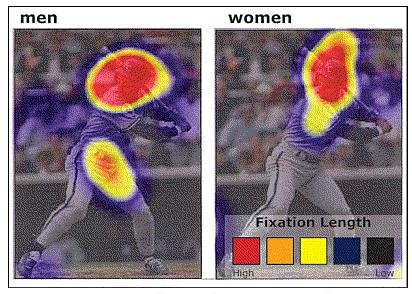
"The Online Journalism Review reports on Jakob Nielsen's use of an eye-tracker to look at how different people read the Web -- particularly news. There are lots of interesting findings, but the best is the revelation that men fixate on any visible genital areas in photos -- even animals' crotches come in for a good eyeballing.

Although both men and women look at the image of George Brett when directed to find out information about his sport and position, men tend to focus on private anatomy as well as the face. For the women, the face is the only place they viewed. This image of George Brett was part of a larger page with his biographical information. All users tested looked the image, but there was a distinct difference in focus between men and women.

Coyne adds that this difference doesn’t just occur with images of people. Men tend to fixate more on areas of private anatomy on animals as well, as evidenced when users were directed to browse the American Kennel Club site."

Meh. Old news.

Ok, I'm too busy to blog right now, but apparently I have enough time to procrastinate (see the past 5 posts). This one just affirms that O.M.G. I'm, like, totally gay.

You Are Most Like Charlotte!

You are the ultimate romantic idealist
You've been hurt before, but that hasn't caused you to give up on love.
If anything, your resolve to fall in love is stronger than ever.
And it's this feminine optimism that men find most appealing about you.


Romantic prediction: That guy you are seeing (or crushing on)?

Could be very serious - if you play your cards right!


hah! my card's already played...where's my bridal registry?

Monday, March 12, 2007

being gay and asian.

Quite a good Australian documentary. Amazingly accurate.

latch key.

In the name of procrastination, and gay short movies. hilarious.

Sunday, March 11, 2007

Dare.

This is a great short.

Dare
Uploaded by mrwildwildwest

Saturday, March 03, 2007

What never was

Cole Porter said it best:

In the still of the night
as I gaze from my window
at the moon in its flight
my thoughts all stray to you.
There he was. Smiling. I'd recognize those eyes anywhere.

I'm Rob.
Oh, right. Hi Rob. Nice to meet you.

He offered his hand. We've never met before, but I felt I knew him. The resemblance was uncanny: same touch, same hair, and those same, unmistakable eyes, glinting at me. I had seen a ghost.
In the still of the night
while the world is in slumber,
oh, the times without number,
darling, when I say to you
It was Saturday. Too cold to be fashionable, but I insisted that Mike and I at least drop by. An innocent dance at the college, made more sketchy by the presence of grad students insinuating ourselves into the tangles of freshmen on the dimly lit floor, was taking place. I'd invited Ben, himself a grad student. He brought Rob.

Rob, how do you know Ben?
I'm year 2.
Oh.
Yeah. And you?
Oh. I'm with Mike. That's how I know Ben.
Don't we feel old here.
Yeah. (he laughs). Ah well.

We didn't talk very much, but we didn't need to. Somethings, you just know. Familiar associations were everywhere--Texas, Duke, Harvard--it was all too familiar; the old rush to the head, the dizzying, stupifying intoxication of a former obsession became real again.

I clung to Mike. Steve found Ben, and soon there were five, two couples and a loner who had no choice but to make the best of the situation. He smiled. A lot. He knew I watched him dance, and liked the attention. Did some floor moves--quite the acrobat. Ryan would never move like this. But still, I could hear that Southern swagger, the same bravado, the soft spoken gaze that to me said more than he ever did out loud. Suddenly, it all came flooding back, the old refrains.
"Do you love me as I love you?
Are you my life-to-be, my dream come true?"
Or will this dream of mine
fade out of sight
like the moon growing dim
on the rim of the hill
in the chill still of the night?
Mike snuck behind me. I felt his strong arms around my waist, his breath on my neck--warm, familiar, lovely. I turned my gaze to find him smiling; I smiled back. With a sigh, I buried myself in his chest, surrendering. His scent enveloped me in a calming balm.

Is something wrong?
No. no. Everything is fine now.
Everything is fine now.